 Snap Eighteen
Disposable Cameras vs Phone Photos at Weddings
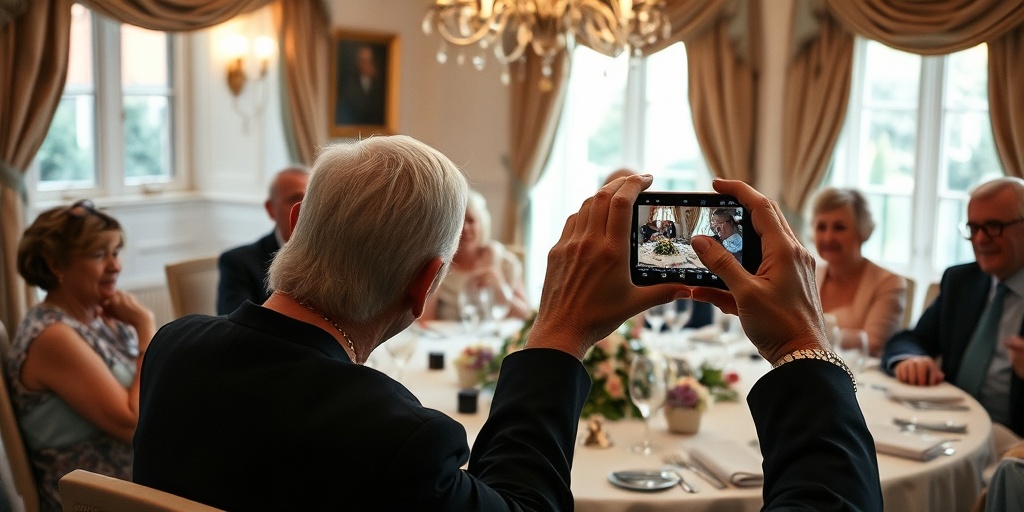
A breakdown of what disposable cameras and smartphone cameras actually deliver at weddings, covering lighting limits, real costs, and photo quality.
The appeal of the disposable camera
Disposable cameras change how guests interact with each other. When someone points a small plastic box across a dinner table, people react without checking their appearance in a digital preview first. The pose is looser. The expressions are less rehearsed.
There is also a natural limit. A standard single-use camera holds 27 exposures. Because guests know the frames are finite, they tend to wait for a specific moment rather than firing ten shots in three seconds. The physical act of turning the plastic winding wheel gives the process weight that tapping glass lacks.
The technical limits of film indoors
Most disposable cameras use color negative film rated at ISO 400 or ISO 800. The lens is a fixed piece of plastic with an aperture around f/9 or f/11, and the shutter speed is locked at roughly 1/100 of a second. These settings need heavy light to produce a visible image.
Outdoors in direct sunlight, the results look warm, grainy, and nostalgic. Indoors under dim reception lighting, the built-in flash is mandatory. That tiny flash only reaches roughly three meters, or ten feet. Anything beyond that distance falls into total blackness, while anyone standing closer than three feet will be completely overexposed and washed out.
- Flash range is strictly 1 to 3 meters
- Focus is fixed from about 1 meter to infinity, making close-up details blurry
- Dim reception rooms without flash result in completely black negatives
Where phones outperform disposable cameras
Modern phones handle low light through computational exposure. When the lights go down and the dance floor opens, a phone combines multiple exposures in fractions of a second to preserve highlights and lift shadows. The lens aperture is usually wider than f/2, letting in many times more light than a disposable camera before the sensor even begins processing.
Phones also offer autofocus, optical stabilization, and immediate exposure compensation. If someone moves quickly during a toast, the phone tracks their face. If the room is dark except for a single spotlight on the cake, the phone measures that specific spot so the couple is not rendered as a white smudge.
The friction of phone photography
The problem with phones at weddings is not the camera hardware. It is the screen. The moment a guest raises a phone, they look at a screen instead of the room. They take five variations of the same shot, inspect them immediately, and often start editing or sending them while the reception is still happening.
The other issue is distribution. Guests capture dozens of genuine, intimate moments that the official photographer missed. Most of those photos stay trapped in personal photo libraries. Months later, the couple still has not seen half the pictures taken by their closest friends.
The real cost comparison
A single disposable camera costs between 15 and 22 dollars. Developing and scanning that roll of film costs another 15 to 20 dollars at a lab. If you place two cameras on each table across ten tables, you are buying twenty cameras.
That works out to roughly 300 to 440 dollars for the hardware, plus another 300 to 400 dollars for lab fees. You will spend around 700 dollars for 540 total frames. Lab scans usually reveal that between 20 and 40 percent of those frames are blank, blurry, or covered by a stray finger over the lens.
Phones, by contrast, use equipment your guests already own and carry. The cost of taking five hundred phone photos is zero dollars, and failed shots are discarded instantly.
How to get the best from both approaches
If you want film, do not distribute cameras to every seat in a dark room. Place them in bright outdoor areas during the cocktail hour, or give them to two specific friends who understand that the flash must stay turned on for every indoor shot.
For everything else, let guests use their phones. You get sharp images in dark rooms without spending hundreds on film development. To solve the problem of photos disappearing onto individual camera rolls, you can set up a shared digital album. A tool like Snap Eighteen lets guests scan a printed QR code at their table to drop their photos directly into one shared collection without creating accounts or downloading software.
This combination protects your budget. You get the fun, tactile novelty of film where the lighting permits, and clean, high-resolution coverage of the moments that happen in the dark.
Questions
How many disposable cameras do you need per table at a wedding?
One camera per table is plenty if you choose to use them. Two cameras per table often leads to half-empty rolls, which you still have to pay full price to develop.
Why did my wedding disposable camera photos turn out dark?
Single-use film cameras have a narrow aperture and a slow film speed, meaning they require huge amounts of light. If guests did not manually switch the flash on for indoor photos, the film simply did not receive enough light to register an image.
Are disposable cameras worth the money for weddings?
They are worth it for daytime outdoor gatherings if you value grainy, candid snapshots. They are rarely worth the investment for dim indoor receptions, where developing costs are high and many frames come out underexposed.
How long does it take to develop disposable cameras?
Most commercial photo labs take between one and two weeks to process the film and email you digital scans. Local specialty labs can sometimes turn them around in three to five business days.
Snap Eighteen is a shared camera for your event. Guests scan a code, everyone’s photos land in one album, and the album closes when the event ends.
See how it works