 Snap Eighteen
Phone Camera Lenses Explained: Wide, Main, and Telephoto
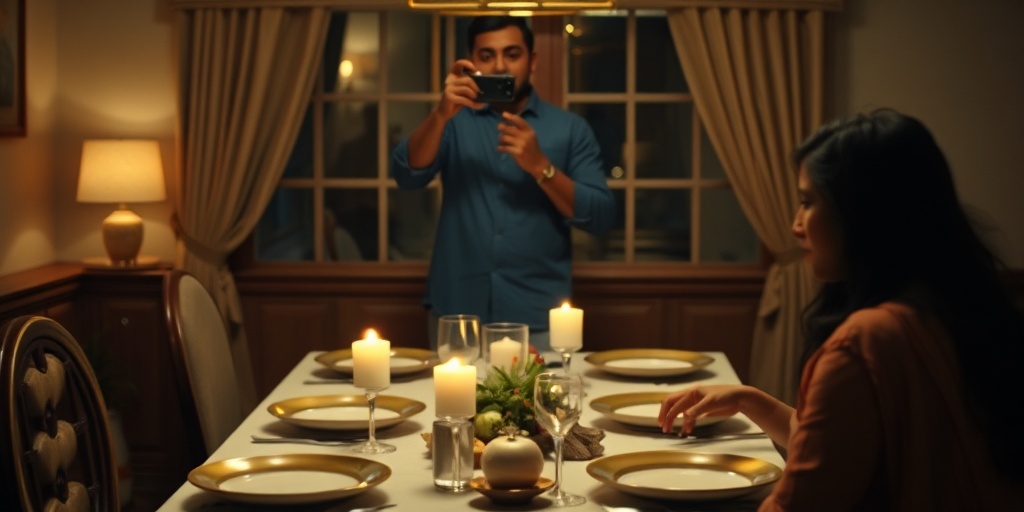
Learn how ultra-wide, main, and telephoto phone lenses change proportions, and discover which camera setting gives the most accurate portraits.
The three focal lengths in your pocket
Most modern smartphones have two or three distinct cameras on the back. Your camera app labels them with multipliers: usually 0.5x, 1x, and either 2x, 3x, or 5x. Tapping these buttons does not smoothly move physical glass elements forward and backward like a traditional zoom lens on a DSLR. Instead, tapping a button physically switches the active sensor and lens assembly.
In traditional photography terms, these multipliers match specific focal lengths. The 0.5x lens is an ultra-wide, roughly equivalent to 13mm to 16mm on a full-frame camera. The 1x lens is the main camera, usually falling between 24mm and 26mm. The 3x or 5x lens is a telephoto, measuring anywhere from 70mm to 120mm.
Each lens bends incoming light onto a flat sensor differently. Because of that physics, each lens alters the apparent shape of the scene, the distance between objects, and the facial proportions of the people you photograph.
The ultra-wide exaggeration
The ultra-wide lens (0.5x) fits an immense field of view into a tiny frame. To pack nearly 120 degrees of sight onto a small rectangle, the glass must bend light sharply at the margins. This produces barrel distortion and perspective stretching.
Objects near the center of the frame appear much farther away than they actually are. Meanwhile, objects near the edges stretch outward toward the corners. If you take a group photo with the 0.5x lens and someone stands near the left or right edge of the frame, their head, shoulders, and arms will visibly warp.
The ultra-wide lens is useful when your back is against a wall in a crowded room and you need to fit fifteen people into a single frame. Outside of that specific physical constraint, it exaggerates distances and distorts human anatomy.
The deception of the 1x main camera
Most people assume the 1x setting represents standard, neutral vision. It does not. A 24mm focal length is technically a wide-angle lens. Human vision focus, when paying attention to a subject, is closer to 45mm or 50mm.
The main camera lies because of how close it forces you to stand. If you want a head-and-shoulders portrait with the 1x lens, you must hold your phone roughly 40 centimeters from the person's face. Perspective is determined solely by distance between the camera and the subject.
At 40 centimeters, features closest to the lens appear noticeably larger than features further back. The nose balloons outward. The forehead curves forward. The ears appear smaller and seem pushed back against the skull. The resulting portrait looks slightly bulbous, even though the phone applied computational fixes to hide the effect.
Why the telephoto lens tells the truth
The telephoto lens (typically 2x, 3x, or higher) is the most honest lens on your phone for people. Because the lens has a narrower field of view, it forces you to step back to frame the same portrait.
Standing two to three meters away from your subject instantly balances facial perspective. The nose, ears, jaw, and cheekbones maintain their natural proportions relative to each other. The background also appears compressed and closer to the subject, which creates a tidy, intentional composition without distracting clutter.
If you want someone to look like themselves in a photograph, use the 2x or 3x button and take three steps backward. This single change eliminates almost all unflattering phone camera distortion.
When the phone secretly lies to you
There is another deception built directly into phone camera software. Sometimes, when you tap 3x, your phone does not actually use the telephoto camera.
Telephoto lenses have smaller physical apertures than main cameras, usually around f/2.4 or f/2.8 compared to the main sensor's brighter f/1.6 or f/1.8. In dim environments like a restaurant, bar, or evening party, the telephoto sensor cannot gather enough light to produce a sharp image.
When the phone detects low light, it often keeps the bright 1x main camera active and silently applies a digital crop to reach 3x. It displays the cropped photo on screen as if it used the dedicated lens. You can test this yourself: switch to 3x in a dim room and cover the telephoto lens with your finger. If the view does not go dark, your phone is using a cropped main sensor.
Which lens to pick at an event
Knowing how each focal length behaves makes choosing your lens straightforward in real time:
When guests gather photos in a shared album using an app like Snap Eighteen, the visual difference between these choices becomes obvious. Photos shot on 1x from two feet away look rushed and distorted, while candid photos shot from across the table at 2x or 3x look deliberate and flattering.
- Use 0.5x only when physically trapped in tight quarters, and keep all faces strictly in the center third of the frame.
- Use 1x for full-length body shots, moving groups, or low-light situations where shutter speed matters.
- Use 2x or 3x for head-and-shoulders portraits, seated conversation shots, and details like table settings or food.
Questions
Why do faces look wider on the ultra-wide lens?
Ultra-wide lenses stretch objects at the edges of the frame to maintain straight lines across a broad field of view. This optical correction pulls and widens anything positioned near the borders of the photo, particularly human faces and limbs.
What lens should I use for a group photo?
Use the 1x main camera whenever possible, stepping back until everyone fits comfortably. Avoid the 0.5x ultra-wide unless physical walls prevent you from backing up, as the main camera keeps faces at the edge of the group from stretching.
Does digital zoom ruin photo quality?
Digital zoom does not bring you optically closer; it simply crops the sensor and enlarges the remaining pixels. On modern phones with high-resolution sensors, a 2x crop often looks acceptable, but cropping beyond that results in soft edges and noticeable digital noise, especially in poor lighting.
Is portrait mode using the telephoto lens?
Most phones default to their 2x or 3x telephoto camera when you enter portrait mode to provide natural facial proportions. However, many phones allow you to toggle back to 1x portrait mode, which uses the main lens and simulates blurred background through software.
Snap Eighteen is a shared camera for your event. Guests scan a code, everyone’s photos land in one album, and the album closes when the event ends.
See how it works